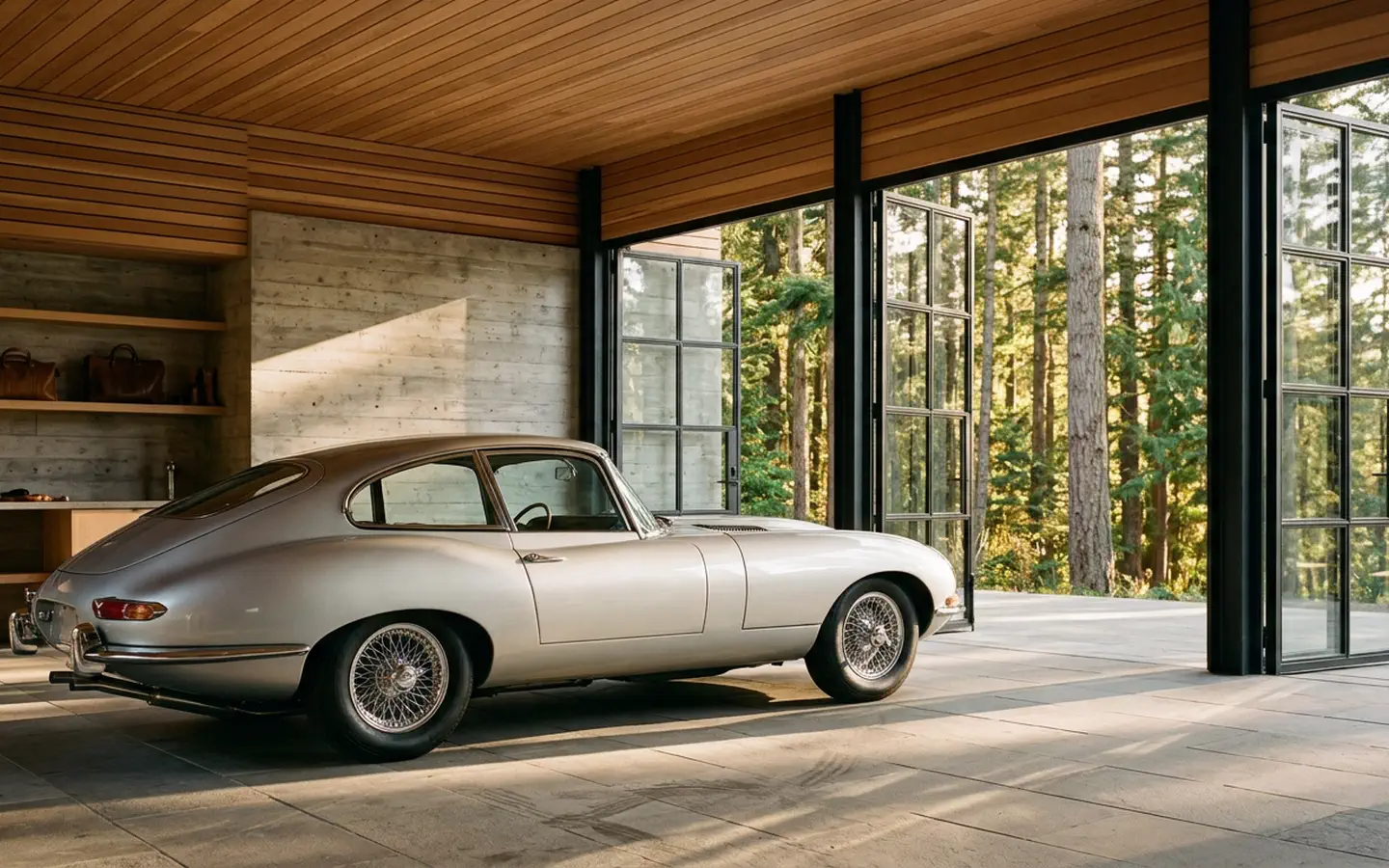
- Almost every classic, exotic, hypercar, restomod, and rare import can be insured, though standard mass-market auto carriers are usually the wrong home.
- Specialty and private-client insurers (Hagerty, Chubb, PURE, Private Client Select, Berkley One) offer Agreed Value settlements with zero depreciation and guaranteed OEM parts.
- Track days (HPDE), timed racing, and off-road competition are excluded from street auto policies and require separate single-event or annual track-day coverage.
- Clean qualification typically hinges on enclosed garage storage, a separate primary daily driver, accurate valuation documentation, and a solid driving record.
Why standard auto policies fall short
If you ask a standard direct-to-consumer auto carrier to insure a $350,000 Ferrari, an air-cooled Porsche 911, or a custom restomod, one of two things happens: they decline the vehicle outright, or they bind a standard Actual Cash Value (ACV) policy that quietly underinsures it.
Mass-market auto contracts are written for depreciating commuter cars. They reserve the right to settle total losses at generic book value, specify aftermarket or recycled parts, and steer repairs to volume body shops unequipped for carbon-fiber tubs, aluminum spaceframes, or factory-certified paint matching. Specialty markets such as Hagerty, Chubb, PURE, Private Client Select (AIG), and Berkley One are built specifically for collector and exotic ownership.
Agreed value vs. stated amount vs. ACV
The single most important clause on any collector or exotic auto policy is how the carrier determines payout after a total loss. Do not confuse Stated Amount with Agreed Value:
| Valuation Method | How Total Loss Pays | Fit for Exotics & Classics |
|---|---|---|
| Actual Cash Value (ACV) | Depreciated book value determined by adjuster after loss | Poor. Ignores collector appreciation and rare specs. |
| Stated Amount | Pays the lesser of stated figure or ACV | Trap. Caps your upside while still allowing depreciation. |
| Agreed Value | Guaranteed payout of the mutually agreed figure (less deductible) | Gold standard. Zero depreciation dispute. |
Coverage by specialty vehicle category
Specialty underwriting is not one-size-fits-all. Here is how insurers handle six distinct collector and enthusiast categories:
1. Modern exotics & hypercars (Ferrari, Lamborghini, McLaren, Porsche GT)
Modern supercars and allocation hypercars are readily insurable with Agreed Value, guaranteed factory OEM parts, flatbed towing, and choice of factory-certified repair facilities. Private-client carriers often excel when an exotic is bundled alongside your home, daily drivers, and umbrella policy. This avoids tight mileage caps while keeping liability limits at $500K–$1M CSL.
2. Vintage classics & appreciating collector cars
Pre-war icons, 1960s–1990s classics, muscle cars, and modern future-classics qualify for dedicated collector programs (such as Hagerty or private-client collector endorsements). Premiums are often dramatically lower than daily-driver insurance because usage is pleasure-focused and storage is controlled.
3. Track cars, HPDE & off-road events
Street auto policies exclude losses on any racetrack or timed competition surface. If you run non-competitive HPDE track days, Bulwark places dedicated per-event or annual track-day policies that cover physical damage to your car on-track. Dedicated trailered race cars can also be insured for storage, paddock, and transit coverage between events.
4. Exhibition-only & unregistered collection pieces
Vehicles kept purely as static art, investment holdings, or museum loans do not need on-road liability or collision. Comprehensive-only storage coverage protects against fire, theft, natural disaster, and enclosed transport at significantly reduced rates.
5. Grey-market imports, JDM 25-year imports, restomods & kit cars
Legally imported 25-year-rule JDM or European grey-market cars, high-end restomods (Singer, Gunther Werks, custom one-off builds), and professionally assembled kit cars are insurable when properly documented. Expect to provide build sheets, receipts, photos, and an independent specialty appraisal confirming replacement value.
What specialty carriers require
To qualify for preferred Agreed Value terms and competitive pricing, insurers typically verify four fundamentals:
- Enclosed, secure storage: A locked private garage or dedicated collector storage facility. Street parking or open carports generally disqualify collector rates.
- Dedicated primary daily driver: For Hagerty and collector-only policies, each licensed driver in the household must have a separate everyday vehicle.
- Clean driving history: Recent DUIs, reckless driving citations, or multiple at-fault losses will restrict private-client and exotic carrier options.
- Documented valuation: Purchase bill of sale, window sticker or build spec, or an accredited appraisal for modified or rare vehicles, revisited periodically as collector markets move.
What is genuinely hard or uninsurable
Transparency saves time. Even in specialty markets, a few scenarios remain difficult or impossible to cover on a personal auto policy:
- Timed wheel-to-wheel racing & street racing: Competitive racing requires specialized motorsports programs; illegal street racing is universally excluded.
- Unregistered or street-illegal builds driven on public roads: Off-road-only buggies or non-compliant imports cannot be insured for public highway operation.
- Salvage or branded-title daily drivers at full retail value: Specialty markets rarely write full Agreed Value on salvage-title vehicles unless fully restored and independently appraised.
- Commercial rental / Turo fleet use: Personal exotic policies strictly exclude peer-to-peer rental or commercial livery use; those require commercial fleet underwriting.
Own three or more collector vehicles? Private-client carriers can often structure a single consolidated collection policy with automatic coverage for newly acquired vehicles (typically 30–90 days), spare parts coverage, and direct coordination with your umbrella liability tower.