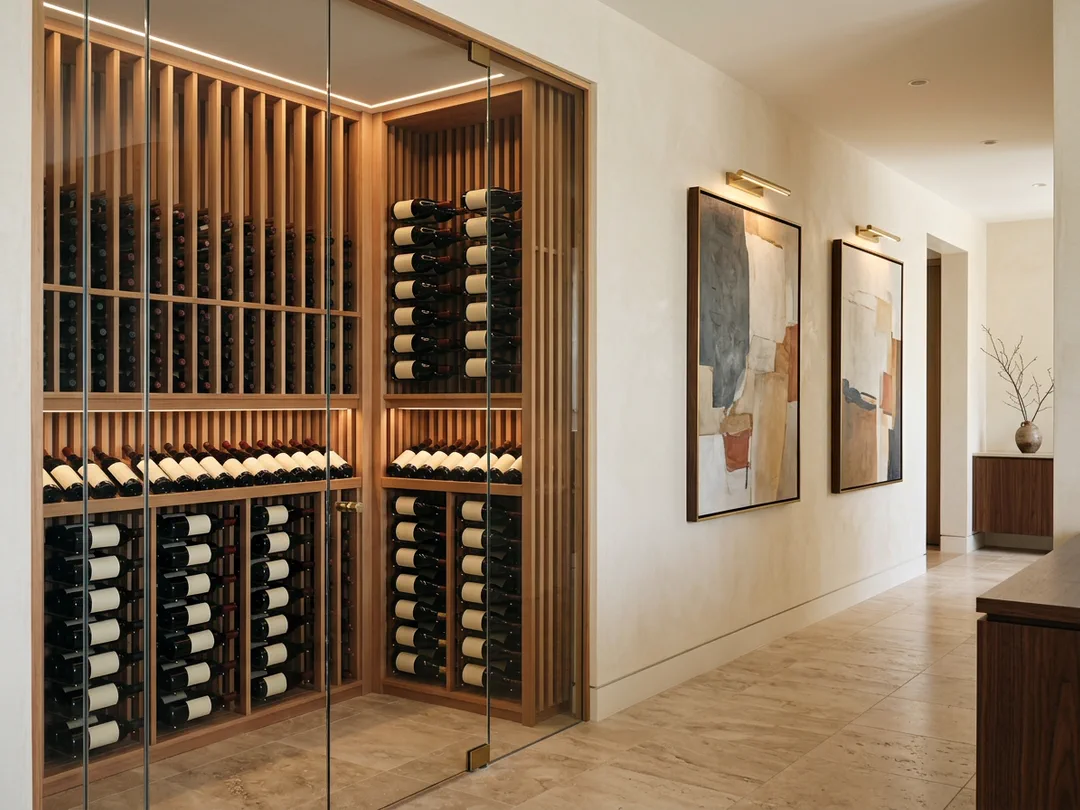
- Standard homeowners policies exclude accidental breakage, transit damage, museum or gallery loans, and post-restoration loss in market value, leaving fine art exposed to its highest-frequency perils.
- A private-client Fine Art policy provides worldwide open-perils coverage at Agreed Value, including accidental breakage, framing damage, art-handler transit, and exhibition loans.
- Diminution of Value (loss in market value after a damaged work is professionally conserved) is one of the most valuable private-client features: standard insurers pay only the conservator’s bill, whereas fine art specialists compensate you for the permanent drop in market value.
- Fine art is economical to insure, often roughly 0.25% to 0.65% of insured value per year for stationary collections in well-protected homes.
Whether your walls hold three meaningful contemporary works or a multi-residence collection of paintings, sculpture, photography, and rare books, standard homeowners insurance leaves fine art exposed to the exact risks most likely to happen.
Why Standard Homeowners Policies Fail Fine Art
Under a typical homeowners policy, artwork sits inside general personal property (Coverage C) alongside furniture and clothing, creating five dangerous gaps:
- No accidental breakage: If a contractor’s ladder punctures a canvas, a wire fails and a framed work drops, or a sculpture shatters, standard named-peril forms pay $0.
- No flood or earthquake protection: A basement leak, storm surge, or seismic tremor destroying lower-level stored works is excluded without specialty endorsements.
- No transit or off-premises loan protection: Shipping a work to a second residence, framer, conservator, or museum exhibition routinely falls outside standard policy terms.
- Valuation fights: Standard adjusters are not fine art specialists and rarely accept gallery appreciation or provenance premiums without prolonged disputes.
- Zero diminution-of-value recovery: Even if a standard policy pays $8,000 to repair a torn canvas, it pays nothing for the $45,000 drop in the artwork’s resale value after restoration.
Open-Perils Protection: Breakage, Transit & Loans
Private-client fine art policies, placed through specialists such as Chubb, PURE, Private Client Select (AIG), Berkley One, and Lloyd’s, are built specifically around how art lives, travels, and appreciates:
| Coverage Feature | Standard Homeowners | Private-Client Fine Art Policy |
|---|---|---|
| Accidental Breakage & Drops | Excluded on fragile items | Covered (open perils, $0 deductible options) |
| Transit, Framing & Storage | Severely restricted or excluded | Worldwide nail-to-nail transit & art storage |
| Museum & Gallery Loans | Not covered | Covered on exhibition loan (with notice) |
| Diminution of Value | Excluded ($0) | Pays restoration cost + permanent loss in market value |
| Market Appreciation Cushion | Capped at stated limit | Often up to 150% of scheduled value on rising artists |
| Flood & Earthquake | Excluded | Broadly included (subject to territory underwriting) |
Diminution of Value After Conservation (Worked Math)
In fine art, a partial physical repair rarely restores 100% of financial value. Because auction houses and serious collectors disclose restoration history in condition reports, even an invisible museum-grade conservation can permanently reduce a work’s market value by 25% to 50%.
A $120,000 scheduled painting suffers a canvas tear during a home renovation. A museum-trained conservator repairs the piece for $12,000, but an independent fine art appraiser confirms the restored condition reduces fair market value from $120,000 to $75,000.
Blanket vs. Scheduled & Pair-and-Set Protection
Just like jewelry, most art collectors pair a blanket fine art limit (often up to $25,000–$100,000 per piece with no upfront appraisals) for works on paper, photography, and emerging artists, while scheduling blue-chip works individually at Agreed Value.
Two additional clauses matter enormously for multi-part works and active buyers:
- Pair, diptych & triptych protection: If one panel of a triptych or one print from a numbered portfolio is destroyed, private-client forms let you either keep the remaining panels and receive the proportional loss (plus diminution of value) OR surrender the intact panels for the full set’s Agreed Value.
- Automatic 90-day newly acquired coverage: Buy a work at Art Basel, a gallery opening, or auction? Private-client policies automatically extend coverage (typically up to 25% of your existing art schedule) for 90 days while you forward the invoice to Bulwark.
Typical Annual Rates & Collection Risk Controls
Fine art is one of the most cost-effective coverages in private-client insurance, frequently pricing between 0.25% and 0.65% of insured value per year (roughly $1,250 to $3,250 annually to insure a $500,000 collection). You can keep rates sharpest and prevent avoidable losses by adopting three practices carriers reward:
- Museum-grade hanging hardware & seismic hooks: Security T-screws and earthquake-rated cleats prevent frame drops in seismic zones.
- Water-leak detection & elevation: Avoid hanging major canvases directly below second-floor plumbing runs or storing uncrated works directly on basement floors; install an automatic water shutoff valve.
- Centralized provenance records: Keep gallery invoices, condition reports, artist certificates, and installation photos stored securely. Bulwark Portal organizes your schedule alongside your home and other collections so nothing gets misplaced.
Want to compare Chubb, PURE, Private Client Select, Berkley One, and Lloyd’s terms for your collection? Start with our Valuables Exposure & Cost Calculator or request a confidential review.