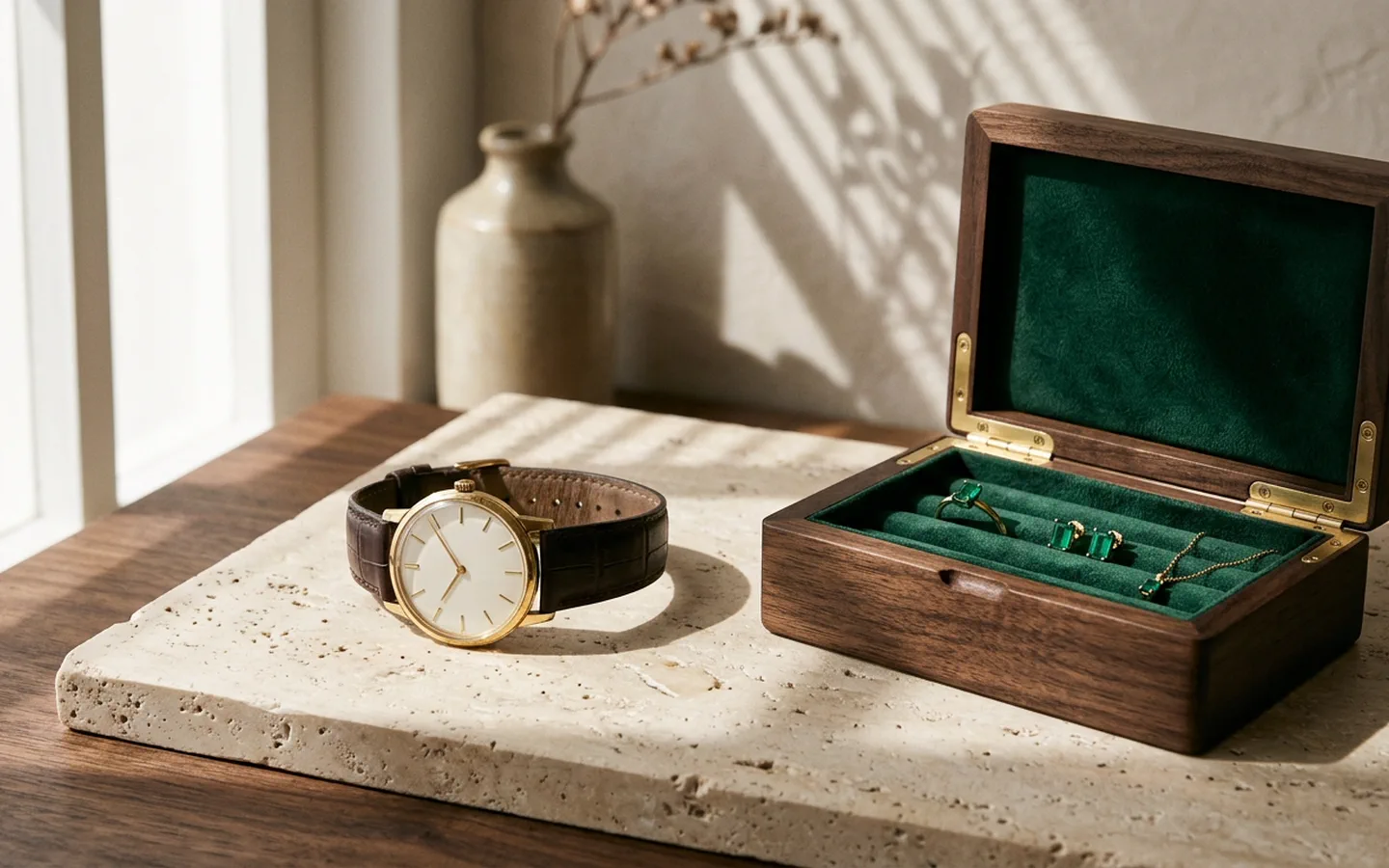
- Scheduled coverage insures each individual item for a specific Agreed Value. It is the right choice for standout jewelry, luxury watches, or trophy fine art where exact payout certainty matters most.
- Blanket coverage insures an entire category (such as $75,000 of jewelry or $150,000 of wine) under one aggregate limit with a per-item cap (typically $10,000 to $50,000) and zero item-by-item appraisals required upfront.
- Most high-net-worth collectors use a hybrid strategy: schedule flagship pieces above the per-item cap individually at Agreed Value, and wrap everyday or rotating pieces in a clean blanket limit.
- Even under blanket coverage, keeping quick smartphone photos, receipts, and an updated inventory list inside Bulwark Portal accelerates claim settlement.
Once you move your jewelry, watches, fine art, or wine off standard homeowners sub-limits and onto a dedicated Valuables & Collections policy, your first structural decision is choosing between scheduled coverage, blanket coverage, or a combination of both.
Scheduled vs. Blanket Side-by-Side
Both options deliver worldwide open-perils protection (including theft, accidental damage, and mysterious disappearance on eligible classes). The differences lie in valuation certainty, upfront paperwork, and per-item limits:
| Dimension | Scheduled Coverage | Blanket Coverage |
|---|---|---|
| Valuation Basis | Agreed Value per item (locked upfront) | Replacement cost or market value at time of loss |
| Per-Item Cap | Each item’s full scheduled value (no low cap) | Fixed cap per item (e.g., $10K–$25K jewelry; $25K–$100K art) |
| Upfront Appraisals | Required above carrier threshold (often $10K–$25K+) | None required at binding |
| Proof Burden at Claim | Minimal: ownership & value already verified | Must provide photos, receipts, or valuation support |
| Market Appreciation Cushion | Often pays up to 150% of scheduled value if market rises | Capped at per-item limit and total blanket limit |
| Best For | Engagement rings, allocated watches, museum-grade art, trophy wine | Everyday jewelry box, rotating wine cellar, mid-value art & silver |
When to Schedule Individual Pieces
Scheduling is non-negotiable whenever an item exceeds a blanket per-item cap, or whenever its replacement value could be contested after a loss. Always schedule:
- Signature jewelry & engagement rings ($10,000+): Guarantees exact Agreed Value plus pair-and-set protection on diamond studs or suites.
- Allocated luxury watches: Watches trading well above original retail (such as steel Rolex Daytonas, Patek Philippe Nautilus or Aquanaut, or Audemars Piguet Royal Oaks) must be scheduled to current secondary-market replacement value. Read our Luxury Watch Insurance Guide for sizing details.
- High-value fine art & rare wine bottles: Works above $25,000 or trophy bottles above $5,000 benefit from scheduled Agreed Value and market-appreciation protection (up to 150% on select Chubb, PURE, and Berkley One forms).
- Vault-stored heirlooms: Scheduling enables steep in-vault rate discounts (often 60%–75% lower than active wear) that blanket limits cannot isolate.
When Blanket Coverage Is Smarter
Scheduling 35 pieces of $1,500 to $8,000 jewelry or 400 bottles of cellar wine is slow, expensive in appraisal fees, and constantly outdated the moment you drink a case or buy a gift. Blanket coverage shines for:
- Active wine cellars: Bottles enter and leave every month. A blanket wine limit (such as $100,000 blanket with a $5,000 per-bottle cap) keeps the entire cellar protected without monthly schedule edits. See our Wine Insurance Guide.
- Everyday jewelry boxes: Gold cuffs, pearl strands, designer bracelets, and gift pieces between $1,000 and $10,000 sit cleanly inside a $35,000–$75,000 blanket jewelry limit.
- Growing contemporary art & photography collections: Works valued between $2,500 and $25,000 each avoid constant appraisal overhead while gaining open-perils breakage and transit coverage.
The Hybrid Strategy: Worked $115,000 Portfolio Example
Rather than choosing all-scheduled or all-blanket, most Bulwark private-client households combine both on one Valuable Articles policy. Here is how an illustrative $115,000 jewelry & watch collection structures cleanly:
This hybrid structure locks in Agreed Value on every piece above $10,000 while keeping everyday pieces protected worldwide against theft, loss, and mysterious disappearance, with zero appraisal hassle on smaller items.
Documentation That Makes Blanket Claims Fast
Because blanket items are not individually pre-approved at binding, taking 15 minutes once a year to document your collection makes any future claim straightforward:
- Take clear photos: Photograph jewelry laid out on a neutral surface beside a ruler (plus close-ups of hallmarks, serial numbers, or watch casebacks).
- Save digital receipts & box/paper photos: Store PDF invoices, jeweler emails, or CellarTracker wine exports in a cloud folder, or upload them directly into the Bulwark Portal.
- Review annually before renewal: If a blanket item appreciates above your per-item cap (common with gold, watches, and emerging artists), ask your Bulwark advisor to promote it onto the Agreed Value schedule.
Want to see how much of your collection is exposed today? Run the numbers in our Valuables Exposure & Cost Calculator or request a quote across Chubb, PURE, Private Client Select, and Berkley One.