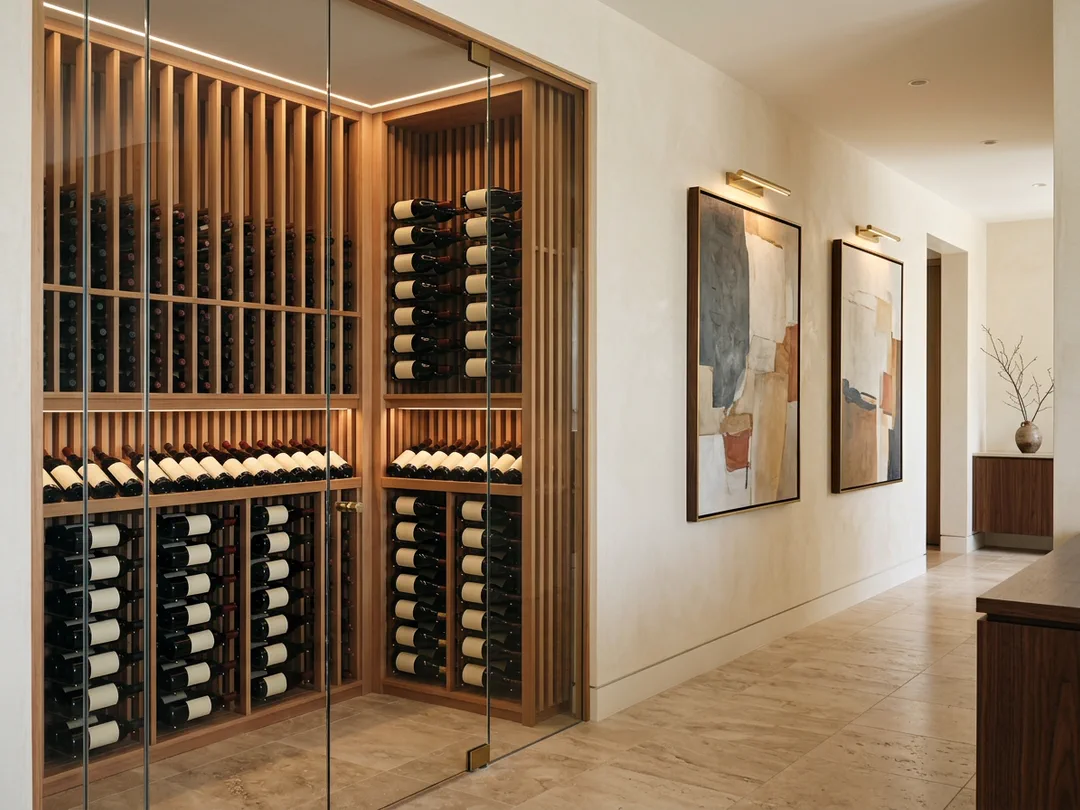
- Standard homeowners policies exclude the #1 threat to fine wine collections: mechanical cooling failure and heat spoilage, along with accidental bottle breakage, earthquake racking collapse, and off-site storage.
- Dedicated wine insurance protects cellars at current market or auction replacement value (not outdated release receipts) against mechanical breakdown spoilage, power outage, breakage, theft, flood, earthquake, and transit.
- Because wine is stationary and stored in controlled environments, annual premiums average roughly 0.5% of cellar value. A $100,000 wine collection typically costs about $500 per year to insure.
- Most collectors use a blanket cellar limit (with a $2,500–$10,000 per-bottle cap) so bottles can be added and uncorked freely, while scheduling rare trophy bottles individually.
A serious wine cellar is both a passion and a live financial asset. It appreciates over years on mailing lists and at auction, yet can be destroyed in 72 hours by an undetected cooling-unit malfunction, power outage, or seismic rack collapse.
Whether your collection sits in a custom home cellar, a high-capacity EuroCave, or a bonded off-site storage locker, insuring it under a dedicated Valuables & Collections policy closes every gap left behind by standard homeowners coverage.
Why Standard Homeowners Policies Fail Wine Cellars
Standard homeowners policies treat wine like pantry groceries, creating four fatal failure modes when a cellar loss happens:
- Mechanical cooling failure & heat spoilage excluded: If your cellar condenser fails, refrigerant leaks, or a thermostat sticks at 82°F, standard policies deny the claim entirely as mechanical breakdown.
- Accidental breakage excluded: Dropping a case of Grand Cru Burgundy or losing a rack during maintenance is not a covered named peril.
- Earthquake & flood excluded: Even a modest tremor can topple unstrapped racking and shatter hundreds of bottles, with zero coverage without standalone earthquake or a private-client wine floater.
- Off-site storage & transit gaps: Standard off-premises personal property limits (often 10% of Coverage C) and named-peril rules leave auction shipments and commercial wine lockers exposed.
What Dedicated Wine Insurance Covers
Private-client wine coverage, offered by specialists including Chubb, PURE, Private Client Select (AIG), and Berkley One, is engineered specifically for how collectors buy, store, and move fine wine:
| Cellar Peril / Event | Standard Homeowners | Private-Client Wine Policy |
|---|---|---|
| Cooling Unit Failure / Heat Spoilage | Excluded ($0) | Covered (mechanical breakdown & utility outage) |
| Accidental Breakage & Label Damage | Excluded ($0) | Covered (open perils, $0 deductible options) |
| Earthquake & Flood Damage | Excluded ($0) | Broadly included on valuable articles forms |
| Temperature-Controlled Transit | Not covered | Covered from wineries, auctions & between homes |
| Valuation at Claim | Original receipt / depreciated | Current market / auction replacement value |
Blanket Cellar Limits vs. Standout Bottle Scheduling
Because wine collections change constantly as new allocations arrive every autumn and bottles are opened every weekend, almost no collector schedules every bottle individually. Instead, private-client wine programs use a clean two-tier structure (see Scheduled vs. Blanket Valuables Coverage):
One aggregate dollar limit (such as $100,000–$500,000+) with a per-bottle limit of $2,500 to $10,000. Drink, gift, and restock freely all year without notifying your broker about every case.
Any single bottle, magnum, or rare original wooden case exceeding your blanket per-bottle cap (such as DRC Romanée-Conti, Screaming Eagle, or Pétrus) is scheduled individually at Agreed Value.
Market Valuation & Typical ~0.5% Annual Cost
Many collectors hesitate to insure their cellar because they assume it carries the same 1%–2% rate as jewelry. In reality, fine wine averages roughly 0.5% of insured value per year, less than a single mid-range bottle of Napa Cabernet per month for a $100,000 cellar:
Do not insure to original release cost: A case of First-Growth Bordeaux or cult California Cabernet purchased ten years ago for $3,600 may cost $9,500 to replace at auction today. Size your blanket limit to current market replacement value (tools like CellarTracker or Wine-Searcher Pro make annual updates fast).
Cellar Inventory & Loss-Prevention Checklist
Carriers reward well-engineered cellars, and good records turn a potential spoilage disaster into a smooth claim:
- Export your CellarTracker / inventory CSV quarterly: Save a dated snapshot showing producer, vintage, bottle format, quantity, and estimated market value. Upload it to Bulwark Portal at renewal.
- Install a Wi-Fi temperature & humidity alert sensor: A $100 connected monitor (sending smartphone alerts above 62°F or below 45°F) catches a failing chiller days before wine cooks.
- Add backup power & seismic racking straps: For cellars above $100,000, especially in California, Washington, or hurricane corridors, a standby generator circuit and secured racking protect both bottles and insurability.
- Verify off-site facility certificates: Commercial wine storage lockers rarely insure your bottles automatically. Confirm your own Valuable Articles policy lists every storage address.
Ready to protect your cellar alongside your other valuables and collections? Estimate your cost in our Valuables Exposure & Cost Calculator or request a wine insurance quote from Bulwark.