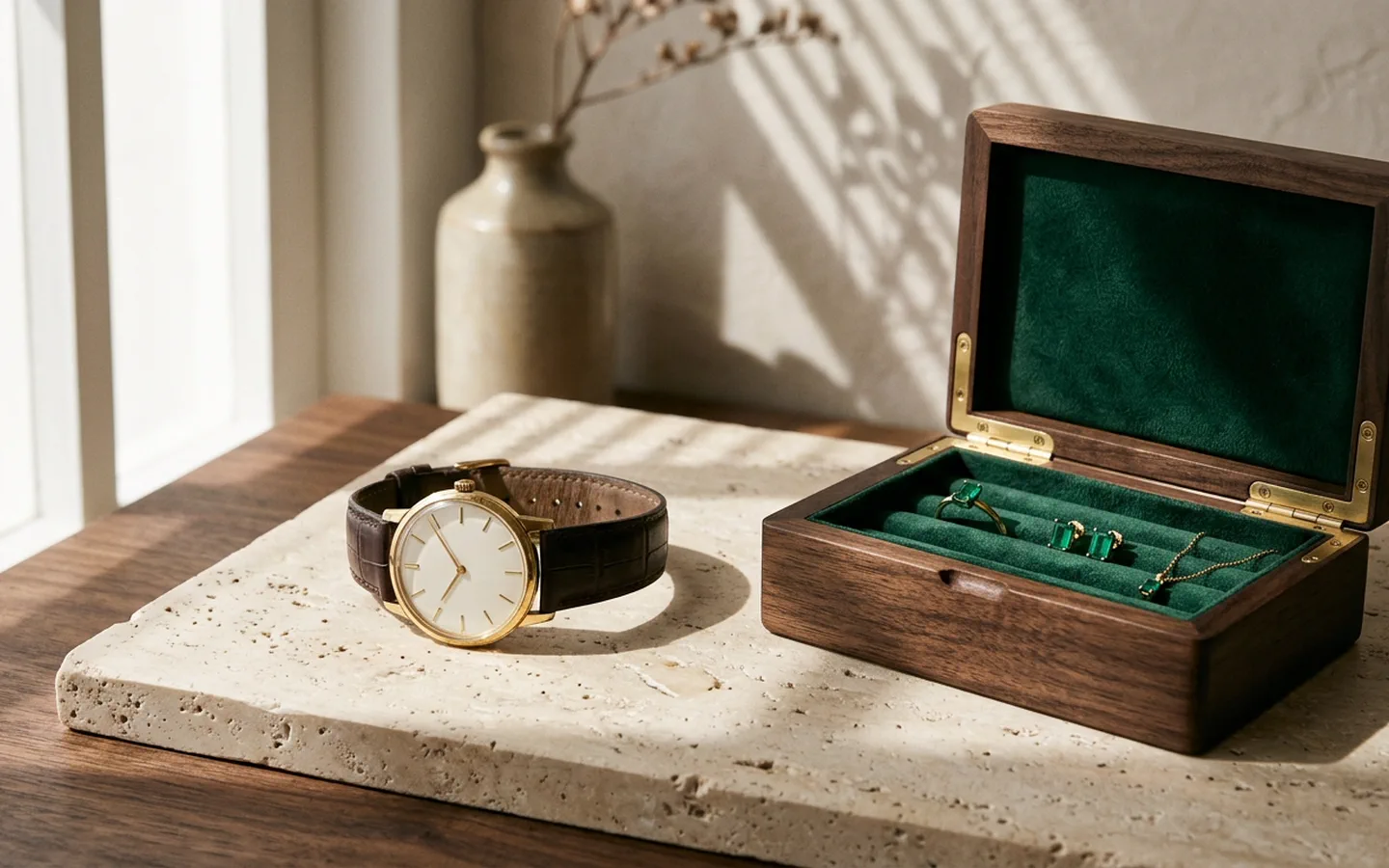
- Standard homeowners policies typically cap jewelry theft payouts at ~$1,500 total and completely exclude mysterious disappearance, travel loss, or a diamond falling out of a worn prong.
- Dedicated jewelry insurance (via a private-client valuable articles policy) provides worldwide all-risk protection, covering theft, accidental loss, mysterious disappearance, and stone damage with $0 deductible options.
- Expect annual premiums around 1% to 2% of insured value depending on your ZIP code, deductible, and safe or vault usage. A $35,000 engagement ring typically costs roughly $350–$700 per year to protect properly.
- A standalone valuable articles policy keeps a jewelry claim completely separate from your homeowners loss history, protecting your home insurance eligibility and renewal pricing.
An engagement ring, heirloom diamond earrings, or a growing collection of fine jewelry can easily represent $25,000 to $250,000+ in concentrated, portable value. Yet standard homeowners insurance treats jewelry as an afterthought, capping recovery far below replacement cost and excluding the most common ways jewelry is actually lost.
Why Standard Homeowners Fails Jewelry ($1,500 Cap)
Even if your homeowners policy lists $400,000 in Coverage C (Personal Property), standard forms carve out strict special sub-limits for portable high-value items. On a typical HO-3 policy, jewelry suffers from four structural traps:
- The ~$1,500 theft cap: Standard policies usually limit total payout for theft of all jewelry, watches, and furs combined to $1,500 (occasionally $2,500). If a burglary takes $60,000 of jewelry, you receive $1,500 minus your deductible.
- Zero coverage for mysterious disappearance: Drop a ring in the ocean, leave earrings in a hotel safe, or notice a clasp broke during a flight? Standard policies exclude accidental loss and mysterious disappearance completely.
- No coverage for lost stones or prong failure: If a center diamond slips out of a worn setting, standard policies classify it as wear and tear and pay $0.
- High homeowners deductible & loss-history spill: Filing a claim against your home policy triggers your $2,500–$10,000 home deductible and puts a claim mark on your property renewal record.
What Dedicated Jewelry Insurance Covers
A dedicated Valuables & Collections policy (or scheduled private-client endorsement) replaces restrictive homeowners rules with worldwide open-perils protection:
| Loss Scenario | Standard Homeowners (HO-3) | Private-Client Jewelry Policy |
|---|---|---|
| Home Burglary ($45K jewelry stolen) | Capped at ~$1,500 minus deductible | Full $45,000 Agreed Value paid |
| Mysterious Disappearance / Lost Ring | Excluded ($0) | Covered worldwide |
| Diamond Lost From Prong / Chipped Stone | Excluded ($0) | Covered for stone replacement & repair |
| Pair & Set Loss (1 Earring Lost) | Pays half value only | Option to surrender remaining piece for full pair value |
| Deductible & Jeweler Choice | Full home deductible; carrier replacement rules | $0 deductible available; cash-out or your own jeweler |
Leading private-client carriers (Chubb, PURE, Private Client Select, Berkley One) also include automatic 90-day coverage for newly acquired pieces (up to 25% of your existing schedule) and up to 150% market-appreciation protection on scheduled items if diamond or gold prices jump sharply before your next appraisal update.
Homeowners Rider vs. Standalone Valuable Articles Policy
You have two structural ways to add jewelry protection: attaching a scheduled personal property rider to your existing homeowners policy, or writing a standalone Valuable Articles policy.
Convenient for one or two lower-value pieces with a standard insurer, but ties jewelry claims directly to your homeowners loss record, risking surcharges or non-renewal on your house after a misplaced ring.
Separate policy with broader Agreed Value wording, cash-out settlement flexibility, pair-and-set protection, vault credits, and complete isolation from your homeowners claims history.
How Much Jewelry Insurance Costs (1%–2% Benchmark)
Across major U.S. metro areas, dedicated all-risk jewelry coverage typically costs 1% to 2% of insured value per year. Three levers materially reduce that rate for larger collections:
- In-vault / safe-deposit discounts: Pieces stored in a bank safe-deposit box (and only worn on select occasions with advance notice to your advisor) can drop to roughly 0.25% to 0.50% per year, a 60%–75% discount off active-wear rates.
- UL-rated bolted home safe & central-station alarm credits: Monitored security systems and bolted TL-15/TL-30 safes unlock meaningful private-client credits.
- Scheduled + Blanket hybrid structuring: Scheduling hero pieces individually while wrapping everyday earrings, chains, and bracelets into a blanket limit prevents appraisal fatigue and simplifies renewals. Read Scheduled vs. Blanket Valuables Coverage for a full comparison.
How to Insure Your Jewelry Properly
- Quantify your current gap: Run your pieces through our Valuables Exposure & Cost Calculator to see how much sits uncovered above your homeowners sub-limit today.
- Gather receipts, GIA certificates, or flat-fee appraisals: Most private-client carriers accept recent sales receipts or GIA grading reports for newer pieces and require formal appraisals only above a threshold (often $10,000–$25,000 per item). Read our Appraisal vs. Agreed Value guide before paying for appraisals.
- Compare private-client terms side-by-side: Share your list with Bulwark in 5 minutes. We compare Chubb, PURE, Private Client Select, and Berkley One terms at $0 advisor fee and respond within one business day.