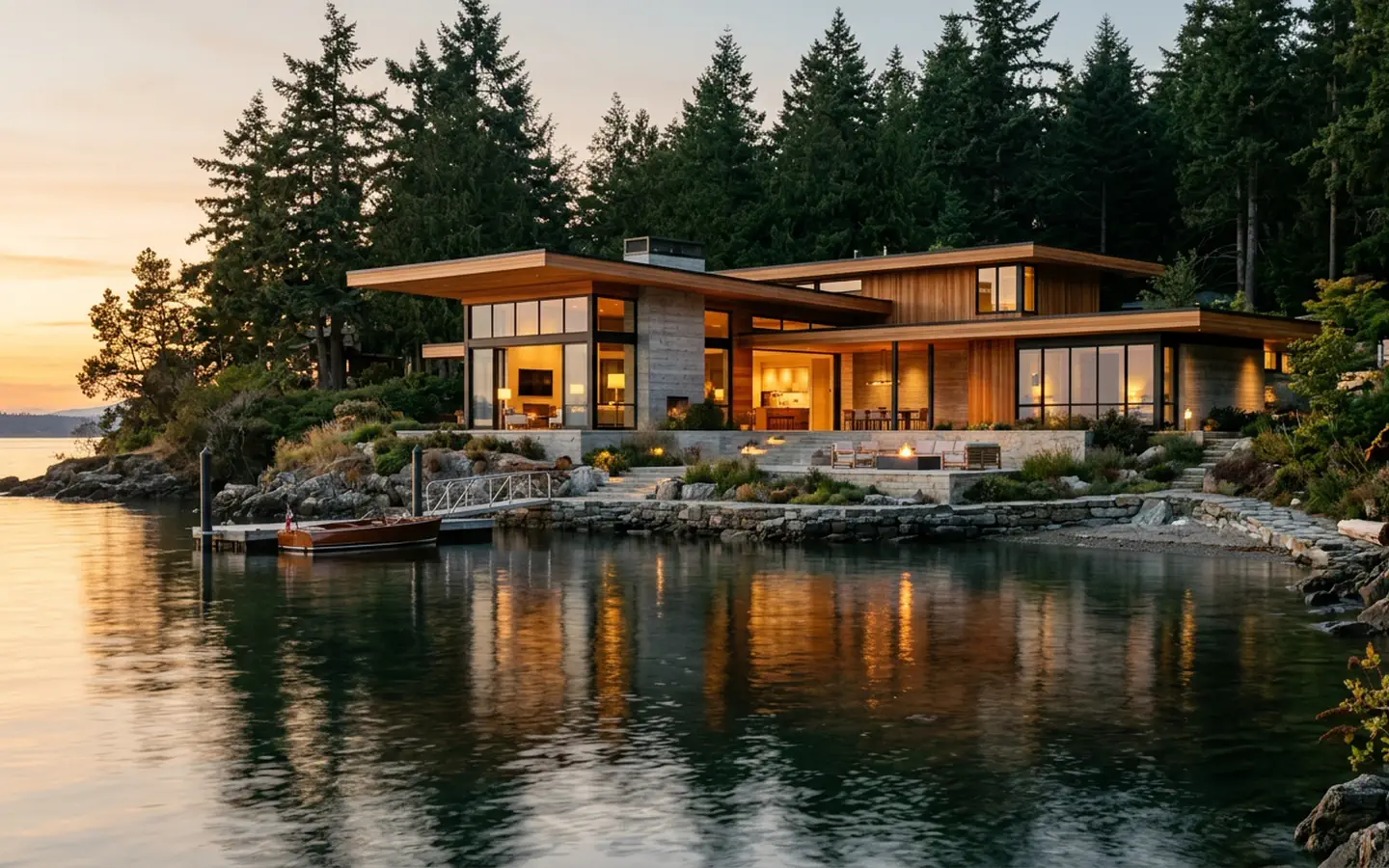
- Every homeowners policy is built around six core coverage sections: Dwelling (A), Other Structures (B), Personal Property (C), Loss of Use (D), Personal Liability (E), and Medical Payments (F).
- Coverage A (Dwelling) must be sized to full reconstruction cost (materials, custom finishes, labor, debris removal), never purchase price or tax-assessed value.
- Standard HO-3 policies restrict personal property to named perils and cap rebuild payouts; private-client HO-5 forms offer open-perils protection and Guaranteed Replacement Cost.
- Flood, earthquake, gradual water damage, and high-value jewelry or art above narrow sub-limits require dedicated specialty policies or scheduled endorsements.
The six core homeowners coverages
Every standard and private-client homeowners policy is organized into six lettered coverage sections: four protecting property and living expenses, and two protecting you against third-party injury or damage claims.
| Section | What It Covers | Typical Sizing Benchmark |
|---|---|---|
| Coverage A: Dwelling | The main residential structure, attached garage, built-in cabinetry, and permanent fixtures | 100% of full custom reconstruction cost |
| Coverage B: Other Structures | Detached garage, guest house, pool, pool house, driveway, fencing, docks, and gazebos | 10%–20% of Coverage A (often higher on estates) |
| Coverage C: Personal Property | Furniture, clothing, electronics, appliances, and everyday household contents worldwide | 50%–75% of Coverage A (Replacement Cost, not ACV) |
| Coverage D: Loss of Use (ALE) | Comparable temporary housing, relocation, and extra living expenses during a covered rebuild | 20%–30% of Coverage A, or unlimited time/cost on HNW forms |
| Coverage E: Personal Liability | Lawsuits, settlements, and legal defense for third-party bodily injury or property damage | $500K–$1M+ underlying your umbrella policy |
| Coverage F: Medical Payments | No-fault minor medical bills for guests injured on your property | $5,000–$25,000 per person |
Rebuild cost vs. market value
One of the most frequent underwriting errors Bulwark discovers in policy audits is a home insured to an outdated mortgage balance or rough real-estate estimate instead of true reconstruction cost. In high-value markets (such as Seattle, the Bay Area, coastal California, New York, or mountain resorts), custom millwork, architectural glazing, site grading, permit timelines, and local skilled labor routinely push reconstruction costs to $500–$1,000+ per square foot.
Private-client insurers conduct complimentary on-site or detailed virtual risk-engineering appraisals so your Coverage A limit reflects actual local build costs, backed by Guaranteed Replacement Cost so post-disaster inflation never leaves you paying the overage out of pocket.
HO-3 vs. HO-5 vs. private-client forms
Two policies with the exact same Coverage A dollar figure can produce radically different claim outcomes depending on the underlying contract form:
| Feature | Standard HO-3 | HO-5 / Private-Client Form |
|---|---|---|
| Contents Perils (Coverage C) | Named perils only (~16 listed causes) | Open perils (all risks unless specifically excluded) |
| Rebuild Cap | 100% stated limit or 125% extended cap | Guaranteed Replacement Cost (no ceiling on HNW forms) |
| Cash-Out Option | Must rebuild to collect full replacement cost | Option to take cash settlement without rebuilding |
| Loss of Use (Coverage D) | Capped at 20% of Coverage A or 12 months | Unlimited actual loss sustained for comparable home |
| Large-Loss Deductible Waiver | Rarely offered | Deductible often waived on covered losses above $50K |
Deductibles & loss-of-use housing
Higher-value homeowners frequently optimize premiums by carrying a $2,500, $5,000, or $10,000 all-peril deductible, especially on private-client policies that waive the deductible entirely on major losses exceeding $50,000. Separate percentage deductibles (often 2%–5%) may still apply to named windstorms, hail, or wildfire in catastrophe-exposed zones.
Pay equal attention to Coverage D (Loss of Use). Rebuilding a custom residence after a major fire often takes 24 to 36 months. Standard 12-month or 20% caps frequently expire halfway through construction, leaving families paying $15,000+ per month in comparable rental housing out of pocket.
Major exclusions to watch
Even the broadest HO-5 homeowners policy does not cover every peril. Flood, earthquake, landslide, gradual water seepage, equipment breakdown, underground service lines, extended vacancy during renovations, and high-value collections all sit outside standard policy terms.
Continue reading in Common Homeowners Insurance Exclusions and Specialty Homeowners Lines to see how to close each gap, or run your ZIP code and square footage through our Homeowners Rebuild & Cost Calculator.